Breast Cancer Awareness Month: Supporting research to improve breast cancer treatment
Published 26th October 2026
Researchers in Gwent are helping to investigate whether a less invasive approach to breast cancer surgery could reduce long-term side effects for patients while maintaining effective cancer treatment outcomes. Exploring a more targeted approach to lymph node surgery for patients with early-stage breast cancer.
Breast cancer is the most common cancer in women in the UK, with many patients undergoing surgery as part of their treatment. For some people, breast cancer can spread to a small number of lymph nodes under the arm, meaning additional surgery may be recommended.
TADPOLE is a national trial, coordinated by the University of Bristol and sponsored by Bristol NHS Foundation Trust. In Gwent, it is being delivered by Aneurin Bevan University Health Board and Velindre Cancer Centre, and is investigating whether a more targeted approach to lymph node surgery can reduce the risk of long-term side effects while maintaining effective cancer outcomes for patients with early-stage breast cancer and low-volume lymph node involvement.
Current practice often involves removing a larger number of lymph nodes from the armpit. While this can be an important part of treatment, it is also associated with complications for some patients, including lymphoedema (chronic arm swelling), pain and reduced shoulder function. These complications can have a lasting impact on quality of life.
Researchers hope to determine whether a more targeted surgical approach can reduce these long-term effects without increasing the risk of cancer recurrence.

The study will follow participants over several years, assessing outcomes including lymphoedema, recovery, quality of life, surgical complications and long-term cancer outcomes.
The study is open to adults aged 18 or over with primary unilateral breast cancer and low volume axillary nodal disease. Anyone with questions about their own eligibility should speak to their breast surgeon or contact the study team at tadpole-trial@bristol.ac.uk
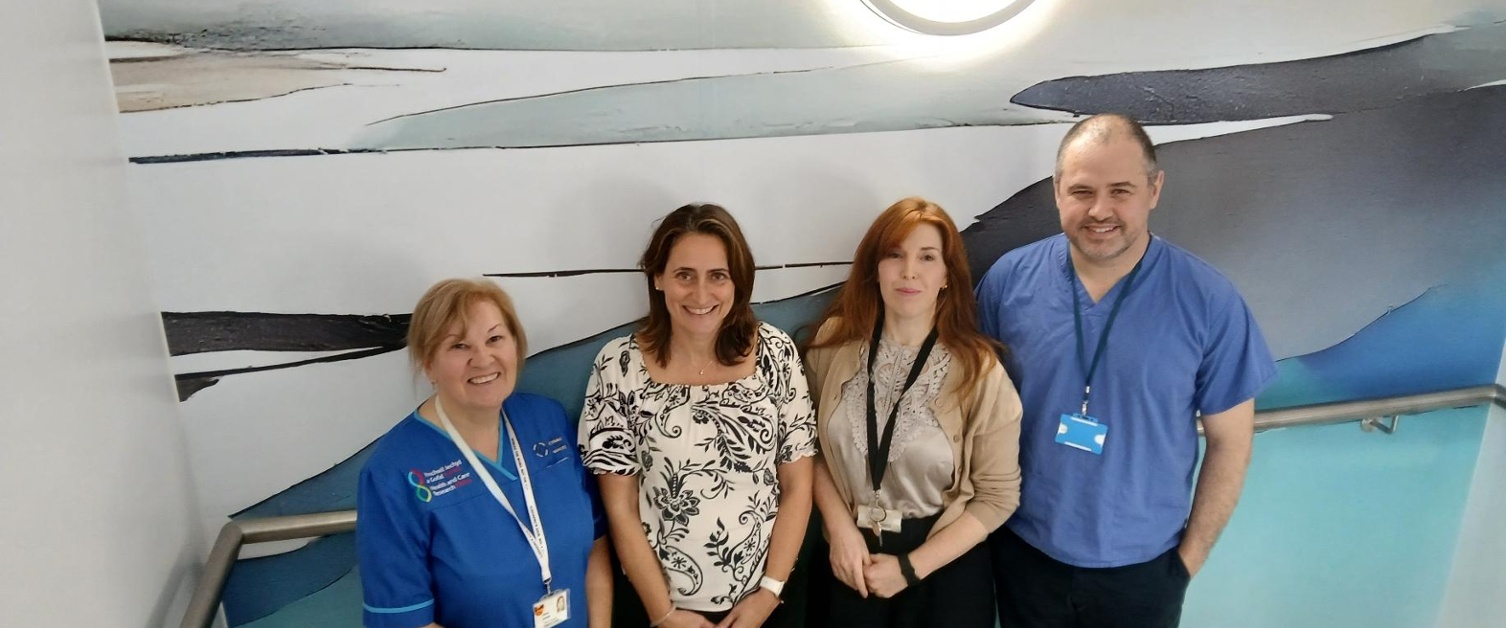
The study is being led locally by Principal Investigator Valentina Lefemine and Co-Principal Investigator Michael Rees through a collaboration between Aneurin Bevan University Health Board and Velindre Cancer Centre, enabling patients to benefit from the expertise and partnership working of both organisations.
Since opening, the study has already recruited its first participant within two weeks, reflecting strong support for breast cancer research and the opportunity for patients to contribute to improving future care.
Dr Valentina Lefemine said: “We are delighted to be actively recruiting to the TADPOLE study. This important research has the potential to shape the future of axillary management in breast cancer, helping us reduce unnecessary treatment while maintaining excellent oncological outcomes.
We are proud to contribute to research that could ultimately deliver more personalised, effective care for future patients.”
More than 1,750 participants have been recruited into breast cancer studies across Wales over the past four years, according to Health and Care Research Wales. TADPOLE is the latest in a long line of breast cancer research studies delivered within Aneurin Bevan University Health Board, helping to advance treatment and improve outcomes for future patients.
Breast Cancer Awareness Month aims to raise awareness of the signs and symptoms of breast cancer, encourage early diagnosis and highlight the advances being made through research. Studies such as TADPOLE are helping to shape the future of breast cancer care, ensuring treatments are not only effective against cancer but also minimise the long-term impact on patients’ quality of life.

The TADPOLE study is funded by the National Institute for Health and Care Research (NIHR) Health Technology Assessment Programme (NIHR158400). The views expressed are those of the author(s) and not necessarily those of the NIHR or the Department of Health and Social Care.
TADPOLE is sponsored by Bristol NHS Foundation Trust and coordinated by Bristol Trials Centre, University of Bristol. The Chief Investigator is Professor Shelley Potter.
TADPOLE is the latest in a long line of breast cancer research studies delivered within Aneurin Bevan University Health Board, including Add-Aspirin, POSNOC, PRE-DX and SWEET. Together, these studies reflect an ongoing commitment to finding ways to improve outcomes, reduce the impact of treatment and enhance the experience of patients affected by breast cancer.
Further information on the study can be found on the website: https://tadpole.blogs.bristol.ac.uk/