Rachel's story: "Without my husband and the hospital team, I wouldn't be here today"
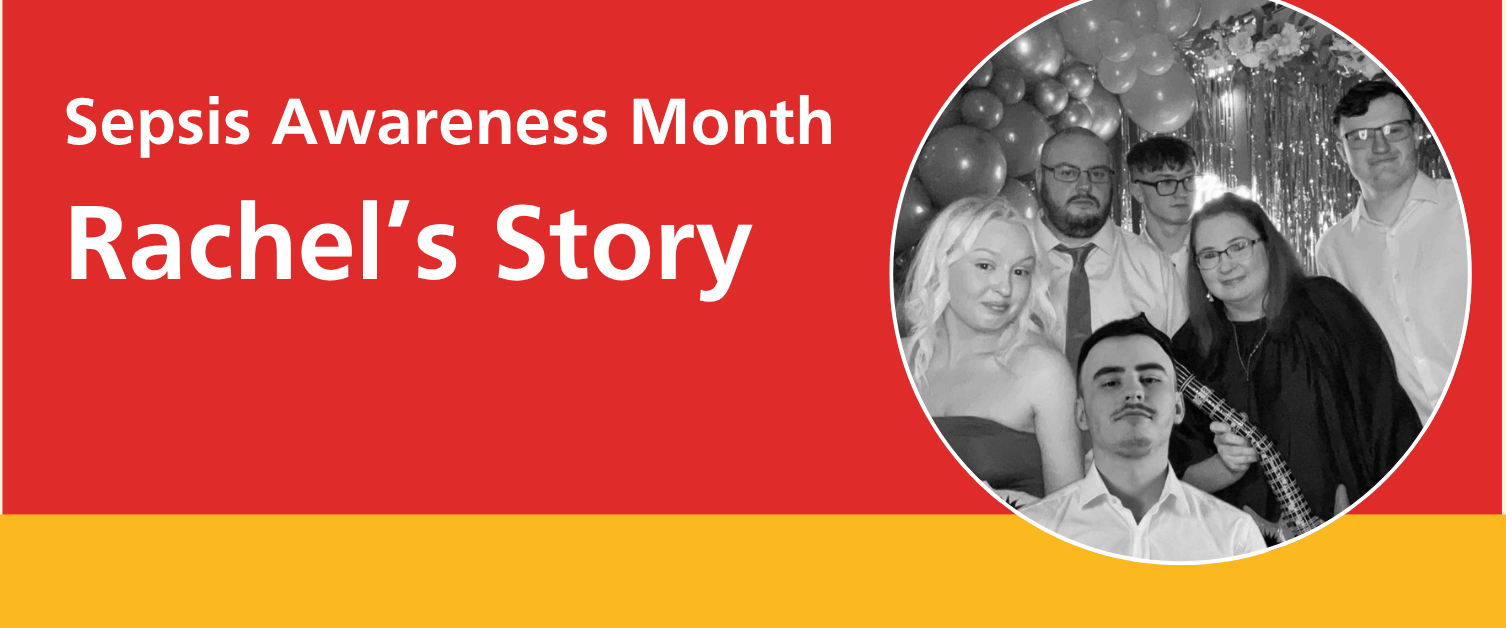
As part of Sepsis Awareness Month, we're sharing Rachel's story to highlight how quickly sepsis can develop and why recognising the signs early is so important. What began as what seemed like a routine infection left Rachel fighting for her life in Intensive Care. Thanks to her husband's quick actions and the medical care she received, Rachel is now on the road to recovery.
Rachel, 46, from Ebbw Vale, was fit, active and rarely unwell. She worked long 12 hour shifts as a support worker and enjoyed a busy family life with her husband, Tim, their three sons aged 25, 23 and 19, and 20-year-old daughter.
In June, what seemed like a routine illness quickly became life-threatening.
"I'd been away in Chester for a few days and started feeling unwell with puffy eyes and what felt like a sinus headache," said Rachel.
"After I got home, I went to see my GP and was treated for a sinus infection with antibiotics."
The following day, Rachel's condition worsened and she began being sick. As it was a Saturday, she contacted NHS 111 and was referred to an Out of Hours GP. The GP suspected she may have been having a reaction to the antibiotics she had been prescribed and gave her anti-sickness medication, along with a different course of antibiotics.
But her condition continued to worsen.
"By Sunday, I felt terrible. I couldn't get off the settee, I had a temperature and I was confused. My husband told me I had a seizure. He put me straight in the car and took me to The Grange University Hospital."
When Rachel arrived at the Emergency Department, staff quickly recognised she was seriously unwell.
"On arriving at the hospital, I fainted. They quickly checked my observations and took me straight into the Resuscitation Unit. They took blood tests, started intravenous fluids and gave me antibiotics. Everything was a blur.
"I remember being told I was scoring 10 on the warning score alerting high risk of sepsis. I’d heard of sepsis but didn’t really know what it was."
Doctors explained to Rachel's husband that getting her to hospital quickly had been vital.
"They told him that if he hadn't brought me in when he did, it could have been a very different story."
Rachel was initially diagnosed with a chest infection and admitted to a respiratory ward, where she received oxygen and ongoing treatment. However, despite input from specialist teams, doctors struggled to identify the source of the infection that had caused her sepsis.
"My condition kept getting worse," she said. "Eventually I was transferred to the Intensive Care Unit."
On 15 June, as Rachel continued to deteriorate despite intensive treatment, she was placed into an induced coma.
"My family were called in to say goodnight before I went to sleep. It was a very frightening time.”
Throughout her stay, Rachel and her family were supported by the Intensive Care team.
"The staff were incredible. They explained everything to my family, answered all their questions and supported them throughout.
"I honestly can't speak highly enough of the people who cared for me. Without them, I wouldn't be here today."
Thankfully, the treatment began to work and Rachel was brought out of the coma on 22nd June.
"I woke up confused, I’d been hallucinating and didn't know where I was. I genuinely thought I'd been kidnapped."
Although Rachel is now home, her recovery continues.
"I still have brain fog and my mobility isn't great. I struggle to stand, I need crutches to walk and I'm having physiotherapy. It's frustrating because I've always been active and I've always been the person looking after everyone else."
Rachel says the experience was particularly difficult for her family, especially her eldest son, who is autistic.
"My husband and four children have all been amazing. I’m especially close to my daughter, and she’s been a huge source of support. My eldest son, who is autistic, found it a really challenging time. Since coming home, he has insisted on making me Weetabix every morning because that’s what I was having for breakfast in hospital. It’s his way of looking after me.”
Reflecting on her experience, Rachel wants to encourage others to learn the signs of sepsis and seek help if they are worried.
"I'd never heard of sepsis and I didn't know what symptoms to look out for.
"If my husband hadn't recognised how poorly I was and taken me to hospital when he did, and if it wasn't for the exceptional care I received, I wouldn't be here today."
Sepsis is a life-threatening medical emergency. If you or someone you know has symptoms of a serious infection or is becoming rapidly more unwell, seek urgent medical help immediately.
Symptoms include:
Slurred speech or confusion
Extreme shivering or muscle pain
Passing no urine (in a day)
Severe breathlessness
It feels like you’re going to die
Skin mottled or discoloured
To find out more about Sepsis visit: Sepsis - Aneurin Bevan University Health Board