UPDATED 19/03/26 "Check Your Children's Vaccination Status" -Gwent Director of Public Health Urges Parents, following Meningitis news in the UK
Updated statement on the Meningitis outbreak in Kent from Director of Public Health for Gwent, Professor Tracy Daszkiewicz - Thursday 19th March, 2026
Further to the message I provided on Monday, we have received an update from Public Health Wales on the meningitis outbreak in Kent.
At this time there are no suspected or confirmed cases of meningitis in Gwent or elsewhere in Wales linked to this outbreak.
However, over the last few days our services have received a significant number of calls and queries about vaccination status, eligibility and what to do about missed vaccine doses.
About the MenB vaccination
Since 2015, babies have been offered the MenB vaccination, as part of the routine immunisation programme. This is currently at 8 weeks, 12 weeks and around 1 year of age.
Babies will need three doses of the MenB vaccine to be fully protected. Children who have missed doses can still receive their MenB vaccination until 2 years of age. Missed doses can be arranged at their GP surgery.
If your child is over the age of 2 years old they are not eligible for the MenB vaccine. After 2 years of age, the MenB vaccine is not routinely given through the NHS, unless your child is in at-risk group, for example, not having a spleen or having a spleen that doesn’t work very well or an immune system problem.
The MenB vaccine is not routinely offered to older children or young adults through the NHS in Wales and is only available privately through some pharmacies, travel clinics and GP practices.
About the MenACWY vaccination
The MenACWY vaccination is offered to young people in school year 9 (13-14 years old) and protects against four strains of meningococcal bacteria (A, C, W, Y). If this vaccination has been missed, young people are eligible to receive it on the NHS, up to the age of 25.
If a young person is due their MenACWY vaccination in school in the upcoming weeks, they should have it through the school nursing service, rather than contacting their GP practice or Vaccination Service. Children in school that have missed the Men ACWY vaccination can arrange it through the School Nursing Service by telephone on 01633 431 685. Young people who have left school and are under the age of 25 years can arrange a catch-up MenACWY vaccination through their GP practice.
If you’re aged 16 to 25 and need the MenACWY vaccine, please contact your registered GP first. They can check your vaccination history and arrange an appointment if you are eligible. If your GP practice is unable to provide the vaccine the Vaccination Service is available as an alternative provider, you can call them on 0300 303 1373
Over the last few days our GPs, School Nursing and Vaccination Service has received a high volume of calls, enquiring about vaccination status and eligibility for Men B and MenACWY vaccination. Before making contact, please be aware that vaccinations cannot be offered outside the routine immunisation schedule.
Whilst there are no cases in Wales linked to the outbreak in Kent, it is important that individuals are aware of the signs and symptoms of Meningitis and Invasive Meningococcal Disease, which can rapidly progress from mild symptoms to severe illness and can include:
- Severe headache
- Neck stiffness
- Photophobia (light sensitivity)
- Confusion/drowsiness
- A rash that does not fade when pressed
- Breathlessness (at rest, on speaking, or on minimal exertion)
- Severe fatigue
- Chills/drowsiness
- Collapse or fainting
- Reduced urinary output
- Chest pain
- Coughing up blood
- Change in colour or darkening of lip.
___________________________________________________________________________________________________________________________________________________________________________________________________
16/03/26
Following recent tragic news of the deaths of two University students in Kent, Director of Public Health, Professor Tracy Daszkiewicz is urging parents and carers to check their children’s vaccination records and ensure they are fully protected against meningitis.
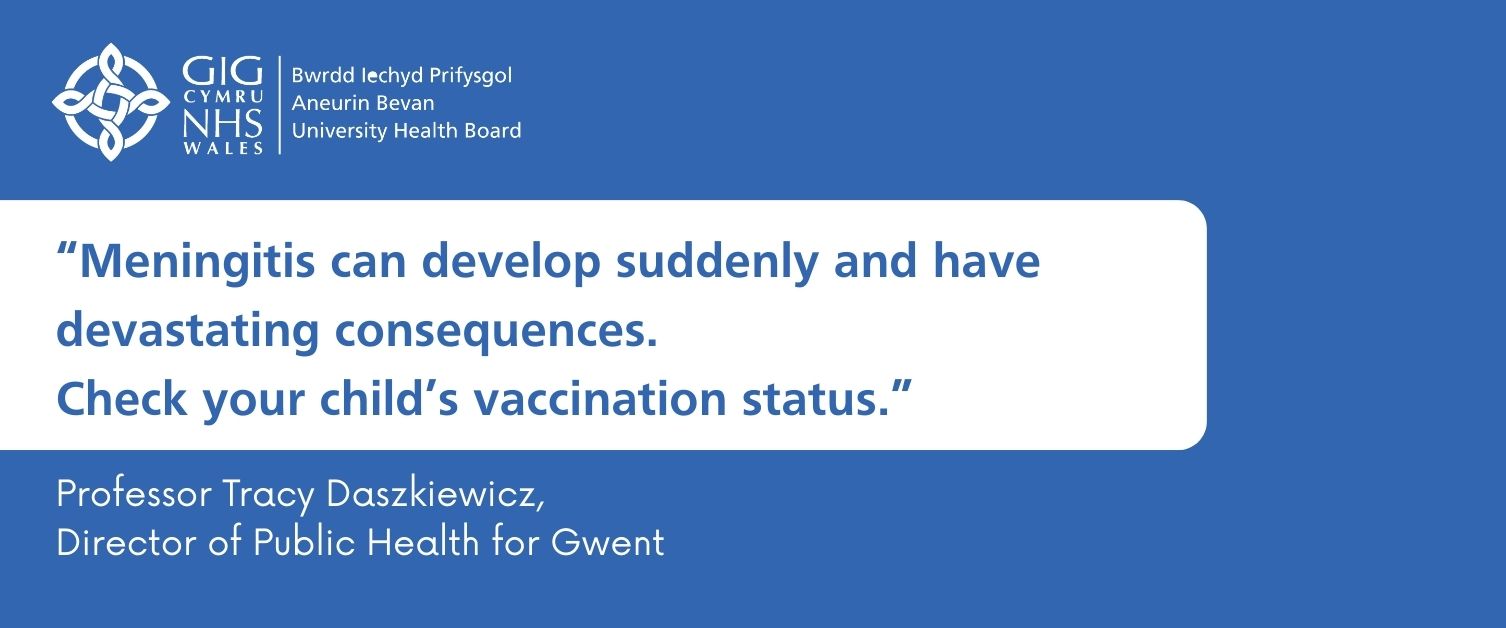
“Meningitis can develop suddenly and have devastating consequences. Vaccination remains our strongest defence. We are encouraging families to take a moment to review their child’s immunisation status and make sure no vaccines have been missed.”
Why vaccination is essential
Meningococcal disease is a life-threatening infection that can lead to meningitis or septicaemia. Although most people recover, some may suffer long-term physical, neurological or psychological complications, and in around 1 in 10 cases, it can be fatal.
It can affect anyone, but babies, young children, teenagers and young adults are at the highest risk. “Vaccination saves lives,” Professor Daszkiewicz adds, “By staying up to date with the routine schedule, from infancy through the teenage years, we can give our children the best possible protection.”
What parents should do now
We encourage families to:
- Check your child’s vaccination record today by calling your GP or our Vaccination Service on: 0300 303 1373.
- Contact your GP if any doses may have been missed
- Ensure your teenager receives their MenACWY and 3in1 boosters
- Stay alert to symptoms of meningitis and septicaemia, and seek urgent medical advice if concerned, more information on signs and symptoms can be found here: Meningitis and Meningococcal Group B (MenB) - Aneurin Bevan University Health Board
More information on vaccination against meningitis can be found here: School Immunisation Team - Aneurin Bevan University Health Board
Information on vaccination can be found on our website: Immunisations - Aneurin Bevan University Health Board