When should you and your family have vaccinations?
World Immunisation Week (24-30th April) is a global campaign run by the World Health Organisation, highlights how vaccines protect people of all ages and help prevent the spread of life‑threatening diseases.
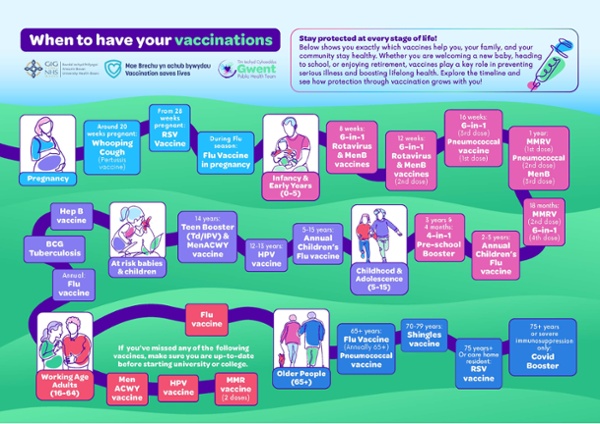
Vaccinations protect us at every stage of life – from pregnancy and the early years, right through to older age. Staying up to date with recommended vaccines helps protect you, your family and your wider community.
To make it easier to understand what’s recommended and when, our vaccination timeline shows:
- Vaccinations during pregnancy
- Routine childhood and teenage vaccinations
- Protection for working-age adults
- Vaccines recommended for older people
Following the recommended vaccination schedule offers the best possible protection against serious illnesses, helping to prevent complications, hospital admissions and long-term health problems.
Did you know?
The measles vaccine was introduced in 1963.
Before vaccination, measles was often seen as a routine childhood illness but carried a hidden and significant risk of serious illness and death. Developed by John Enders and later refined by Maurice Hilleman to reduce side effects, the measles vaccine has saved millions of young lives worldwide. However, cases are now beginning to rise again in the UK, underlining the importance of keeping vaccinations up to date.
Smallpox has been eradicated thanks to vaccination.
Smallpox is one of the greatest success stories in public health. Following a global vaccination programme, the World Health Organization declared the disease eradicated in 1980. The last known case was in Somalia in 1977, demonstrating the powerful role vaccines play in protecting populations.
Vaccines remain one of the safest and most effective ways to protect our health. Making sure you and your family are vaccinated on time helps keep everyone safer, including those most at risk.
👉 For further information, visit the vaccination pages on our website:
Immunisations - Aneurin Bevan University Health Board