"Getting Medical Help from the Right Service Could Save the Local NHS This Winter" say Gwent Emergency Care Doctors
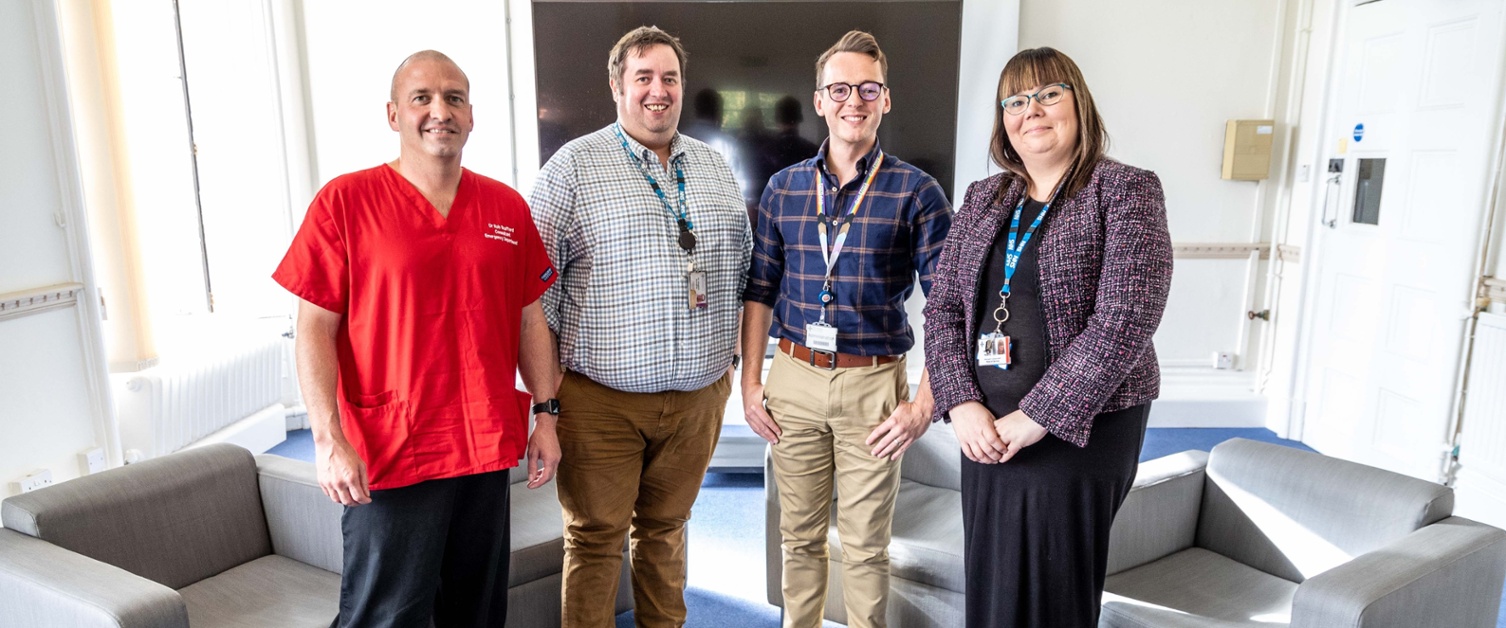
Gwent’s Urgent and Emergency Care doctors are encouraging local residents to think carefully about where they go to for help this winter - and have outlined how choosing the right healthcare service could be crucial to supporting the NHS.
In the latest episode of Gwent Health Matters - a new podcast by Aneurin Bevan University Health Board – Emergency Medicine Consultant, Dr. Rob Stafford, and Clinical Director of Emergency Medicine, Dr Alastair Richards, have discussed why accessing the right service for their needs is key to keeping everyone well and our local healthcare system running smoothly over the Winter period.
When asked what the people of Gwent could do to support the NHS this winter, Dr Rob Stafford, Consultant in Adult and Paediatric Emergency Medicine at the Health Board, recognised that the local healthcare system can be difficult to navigate but that taking the time to identify the most appropriate service can make a big difference.
He said:
“When somebody feels that they need some medical help, [I would ask] that they invest some time in trying to access the right bit of the system.
“So I think that you can see an emergency, the emergency department, as being somewhere where the lights are on, that you can access medical care, but it's not always the right place for people to go as a first point of call. It is for some people if they have things like severe chest pain or breathing problems or signs of a stroke. But for more minor conditions like more things like coughs and colds, there are other options available.
“There are services like 111 which people can access if they're not sure which part of the system to go to. They can access care in pharmacies. And so I would just ask people to spend a little bit of time trying to access the right bit of the system at the right time.
“And I'm not telling people who have fallen, who can't get up, that they shouldn't be coming to hospital. They definitely should be, but people who have more minor conditions should consider whether coming to the hospital, to the emergency department, as their first port of call is the right thing for them.”
Dr Alastair Richards, Clinical Director for Emergency Care at the Health Board, echoed Dr Stafford’s comments and also noted that the vast majority of local residents are correctly choosing the appropriate medical help. He said:
“There are bits where in being kind to yourself, taking a few minutes to think ‘is this immediately life threatening or something critical where I know I’m going to need to be in hospital? and if not, what is the best route for me?’ because if you get it right - and I should stress – most people do get it right; it’s not that people are sitting in the ED when they should be in the GP Surgery waiting room – that categorically isn’t the case.
“It is that there are multiple areas where people can access the system and it is complicated, but the knock ons [effects] are that you might get a better experience choosing a slightly different route in and end up with the same outcome and at the same time, free up the resource in the Emergency Department to concentrate on the really sick or to not have a long wait on a hard chair and the frustrations that go with that. They’re frustrating for us as staff on the shop floor so I can only imagine how frustrating it is [for everyone else].”
Rebecca Pearce, Head of Service for Urgent Primary Care in Aneurin Bevan University Health Board, added to the conversation by highlighting the many different care options available within primary care services.
She said:
“It’s acknowledging that the right support may come in lots of different forms. So historically it would have been primarily GPs that patients would have accessed, but now GP Practices, Urgent Primary Care and Pharmacies have expanded and have a much wider multi-disciplinary team.
“All of those are fully integrated with advice available from GPs where needed, seeing patients appropriately for their skills.”
In a discussion around the crucial role of a co-ordinated, joined-up approach between community and hospital services, Dr Stafford also outlined how team work and support from Gwent residents is key to helping our local healthcare system run as smoothly as possible over the winter period.
He said: “When we become very busy, it means that we then start to struggle to provide care to the very sickest people. What we need is a team effort where everybody plays their part to try and make the system work as effectively for everybody as a whole.”
Dr Richards also expressed his profound gratitude to local communities for their ongoing support throughout challenging circumstances.
He said: “And also, to say thank you, at this point, to the people of Gwent because they are tremendously supportive of the frontline staff and we’re very grateful for that because all of us are working as hard as we can to provide the best care we can in a difficult environment at the moment so those little things could really help us to help you.”